

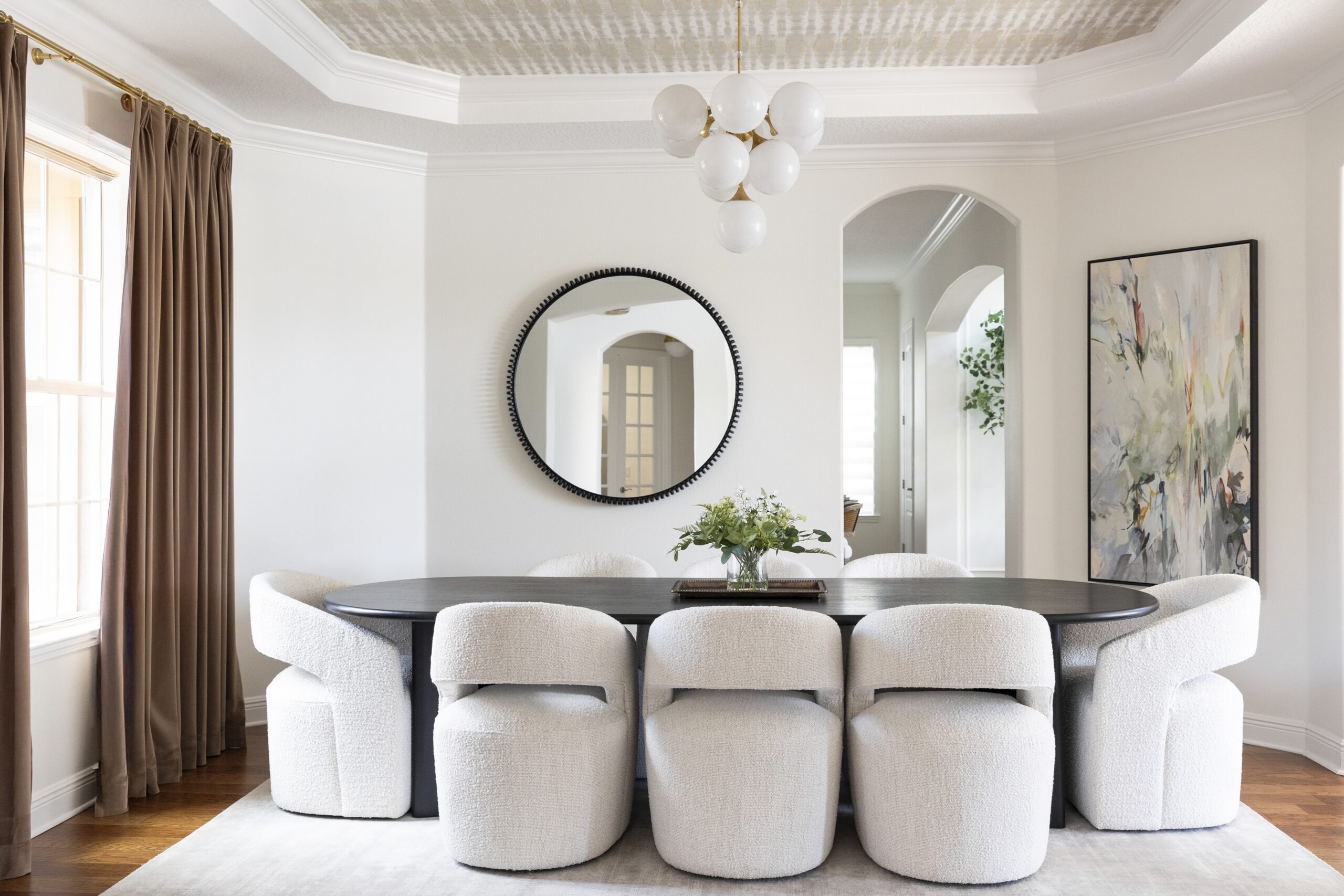
Is the Formal Dining Room Making a Comeback?
There was a period of time when mentioning a formal dining room felt a little like admitting you still owned a fax machine.
Open-concept living had taken over, everybody wanted the kitchen, dining and living spaces flowing into one another, and any room with the word formal attached to it immediately became a candidate for something apparently more useful. Home office? Absolutely. Playroom? Probably. A place to pile Amazon boxes until someone came over? Inevitably.
And, to be fair, I understood the argument.
If a room is sitting untouched for 360 days of the year waiting for Thanksgiving to justify its existence, I am going to have questions about whether it deserves that much square footage too.
But lately, I have found myself thinking differently about the dining room.
I want us all eating dinner beneath a chandelier in our finest clothing every Friday evening, although if your children are volunteering for that, please tell me your secrets.
After years of asking one enormous open space to cook, eat, entertain, watch television, do homework and somehow still look serene, there is something very appealing about a room having one clear purpose again.
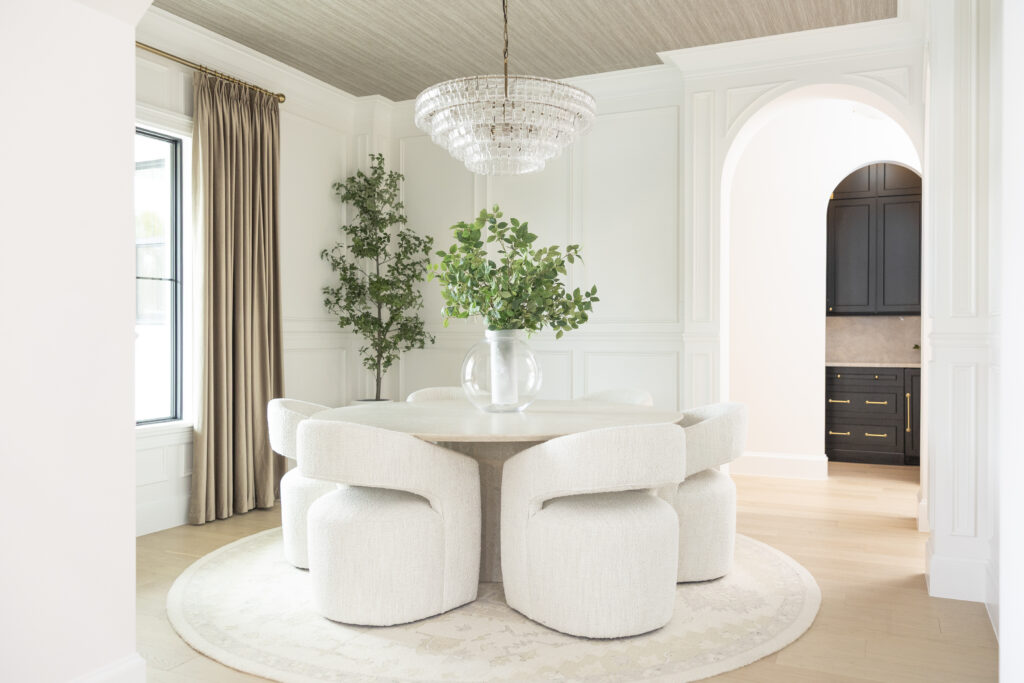
I have never been interested in a room nobody is allowed to use
You already know how I feel about beautiful rooms being emotionally reserved for guests.
I am all for having spaces in a home that feel elevated, grown-up and a little more special than the everyday family room. In fact, I think those differences are what make moving through a home interesting.
What I do not understand is spending a significant amount of time and money designing a gorgeous room, then treating it as though the furniture is under museum protection.
If we are bringing the dining room back, I want people in it.
I want Friday-night dinners that go on for three hours, homework spread across the table before guests arrive, wine glasses left behind after everyone has moved into the kitchen and a family who does not need a calendar invitation to sit down there.
That does not make it any less special.
Maybe we’re craving rooms that feel like rooms again
I love open-plan living when it makes sense for the house, but we probably went through a phase where openness became the answer before anyone had asked the question.
Remove the wall. Open the kitchen. Connect everything. Make it bigger.
Then everyone moved in and discovered that, occasionally, it is quite nice not to hear the dishwasher during dinner.
A dedicated dining room creates a change of pace within the house.
You leave the kitchen, even if only by a few feet or through a wide cased opening, and suddenly the lighting is softer, the conversation feels more focused and nobody is staring at the evidence of everything you used to make dinner.
There is something lovely about that.
It also gives us an opportunity to create an entirely different mood without asking the rest of the home to participate.
A dining room can take a little drama.
Actually, I think it should.
You are not passing through it twenty times before breakfast or trying to find a lost sneaker in there at 7:15 in the morning, so we can afford to make choices that feel atmospheric rather than purely practical.
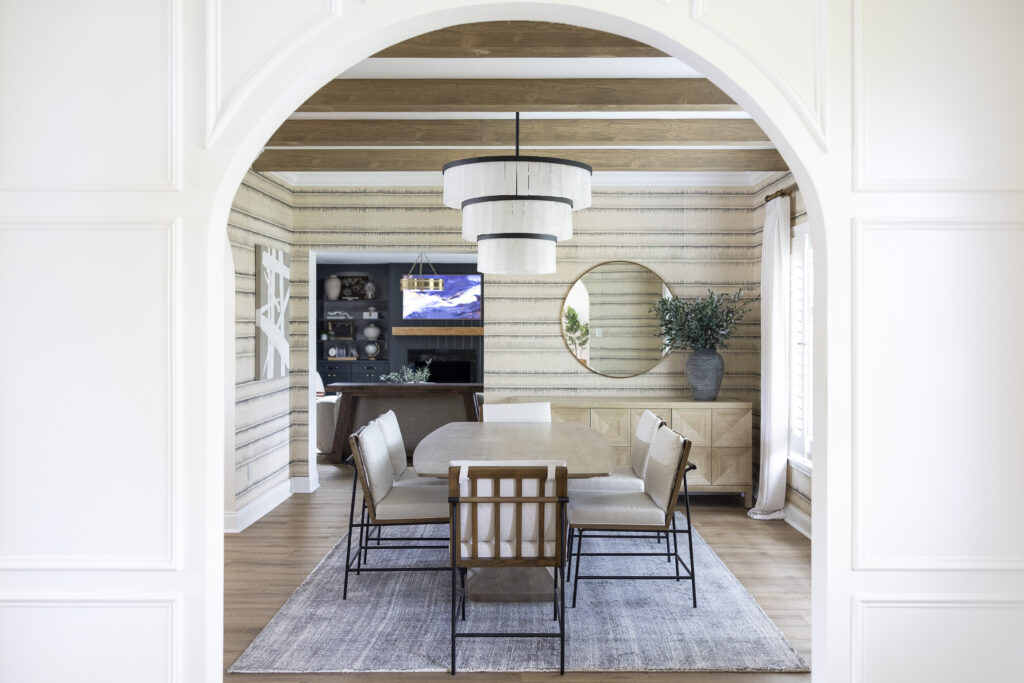
The best dining rooms are not waiting for a holiday
For years, the traditional dining room often came with an unwritten rule that it should remain pristine until people deemed important enough arrived.
There was usually very good china involved, chairs nobody particularly enjoyed sitting in and at least one piece of furniture containing things children were absolutely not supposed to touch.
Today’s version can be so much more relaxed.
The table can still be beautiful enough for Christmas dinner while also being comfortable enough for pizza on a Sunday night.
You can mix antiques with contemporary pieces, use art that gives the room personality and collect tableware over time rather than buying an entire matching set because apparently sixteen identical place settings were once a prerequisite for adulthood.
I love a room that can dress up when it needs to without feeling as though it is permanently waiting for an occasion.
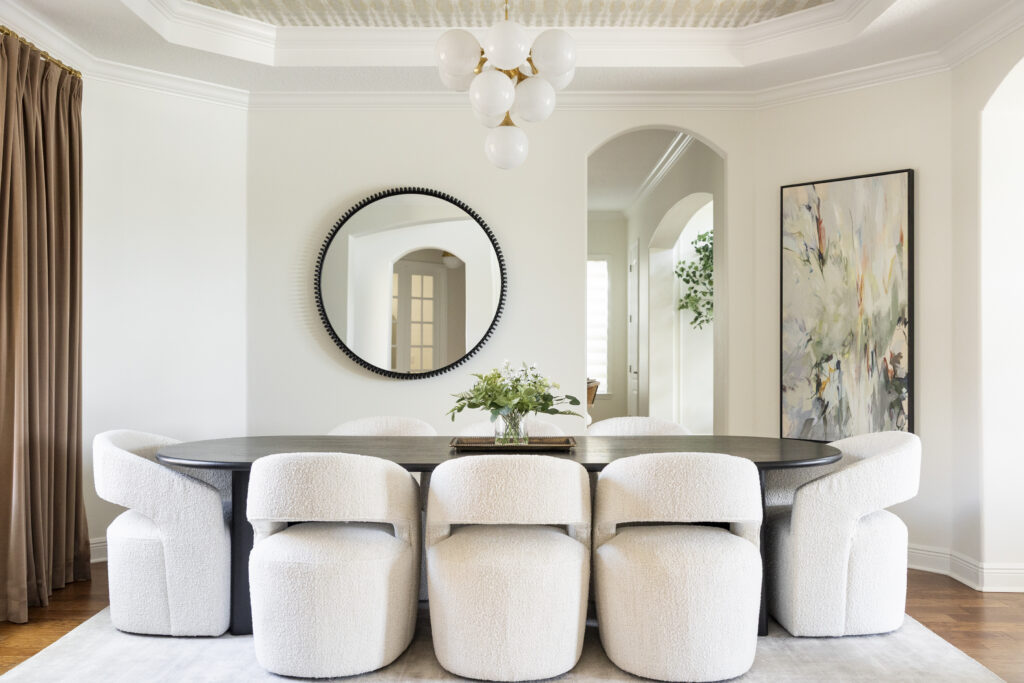
Hosting has changed too
I think this is another reason dining rooms are becoming interesting again.
People still want to gather, but entertaining at home does not necessarily look like the very formal dinner party many of us associate with a traditional dining room.
Sometimes it is eight friends who were supposed to leave by ten and are still there at midnight.
It might be family coming in for the weekend, a birthday dinner, cocktails before everyone moves outside, or twelve people squeezed around a table because apparently nobody believes your very clear statement that it only seats ten.
Those are the evenings I want to design for.
When we design homes for clients who entertain often, we are thinking about much more than the table itself. We are looking at how people arrive, where drinks are served, how the dining room connects to the living spaces and where everybody naturally goes once the plates are cleared.
Does every house suddenly need one? Absolutely not.
And here is where I ruin the comeback story slightly.
I still would not add a formal dining room simply because formal dining rooms happen to be having a moment again.
If you have eaten every meal at your kitchen island for the past decade, hate hosting and genuinely cannot imagine choosing to sit in a separate room for dinner, I am not going to create one purely so we can say the house has it.
Square footage is too valuable for that.
Maybe your family would use that space far more as a library, office, sitting room or larger kitchen.
Perhaps what you actually need is a generous dining area connected to the kitchen that gives you the same sense of occasion without being completely separate.
This is why I always come back to the same question when we are reviewing plans: what will you actually do here?
Not what does a luxury home usually have.
What will you do there?
If the answer is, “This is where our family will have Sunday dinner, where we host our friends and where everybody ends up at Christmas,” wonderful. Give me the dining room and let us make it incredible.
If the answer is, “Probably walk past it,” I would rather have the square footage back.
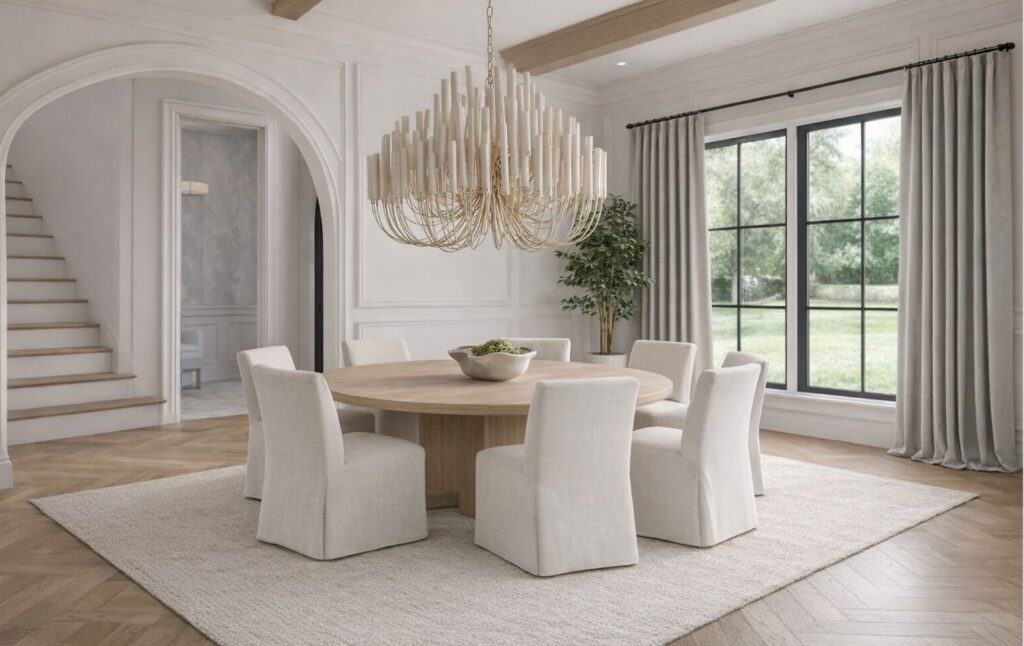
But if we are doing one, let’s really do it
This is not the room where I want to timidly choose the safe option because we are nervous about getting tired of something.
Dining rooms can handle personality!
Give me the wallpaper, the art, the incredible chandelier, a ceiling treatment, rich drapery, antique case goods, a table with enough presence to anchor the room and chairs that make people want to stay seated long after dinner is finished.
The room should still belong to the rest of the house, of course, but it does not need to behave exactly like every space around it.
Not every space needs the same energy.
The kitchen can feel bright and active, the family room comfortable and relaxed, while the dining room has a little more mood to it.
And please, let the chairs be comfortable.
Nothing destroys the romance of a beautiful dinner party quite like eight adults silently wondering when it is socially acceptable to move somewhere with cushions.
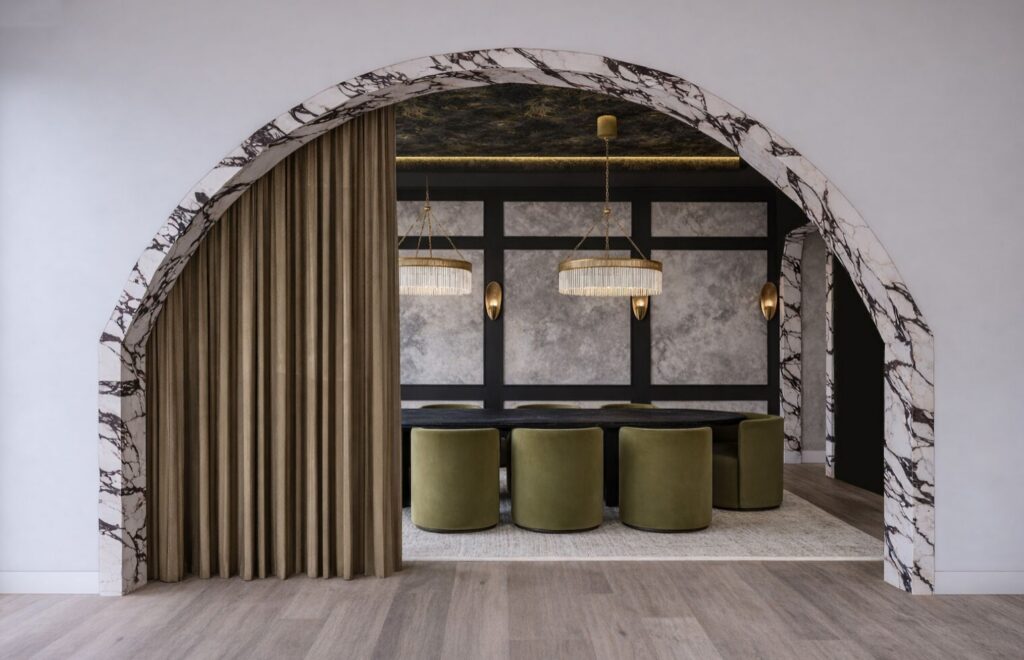
So, is the formal dining room back?
I think something better is.
The version I am seeing now is less interested in formality for formality’s sake and much more interested in creating a room that makes gathering feel special.
There is still beauty, detail and a sense of occasion, but without the feeling that everyone needs to sit up straight and ask permission before using a coaster.
I like the idea of a room created because sitting around a table together still matters.
In a home filled with places to multitask, scroll, work, watch and rush through the next thing, there is something wonderfully old-fashioned about giving conversation its own room.
Just maybe leave Grandma’s uncomfortable dining chairs in the past.
Leave a Reply
signature services


custom
new builds

virtual playbook


