

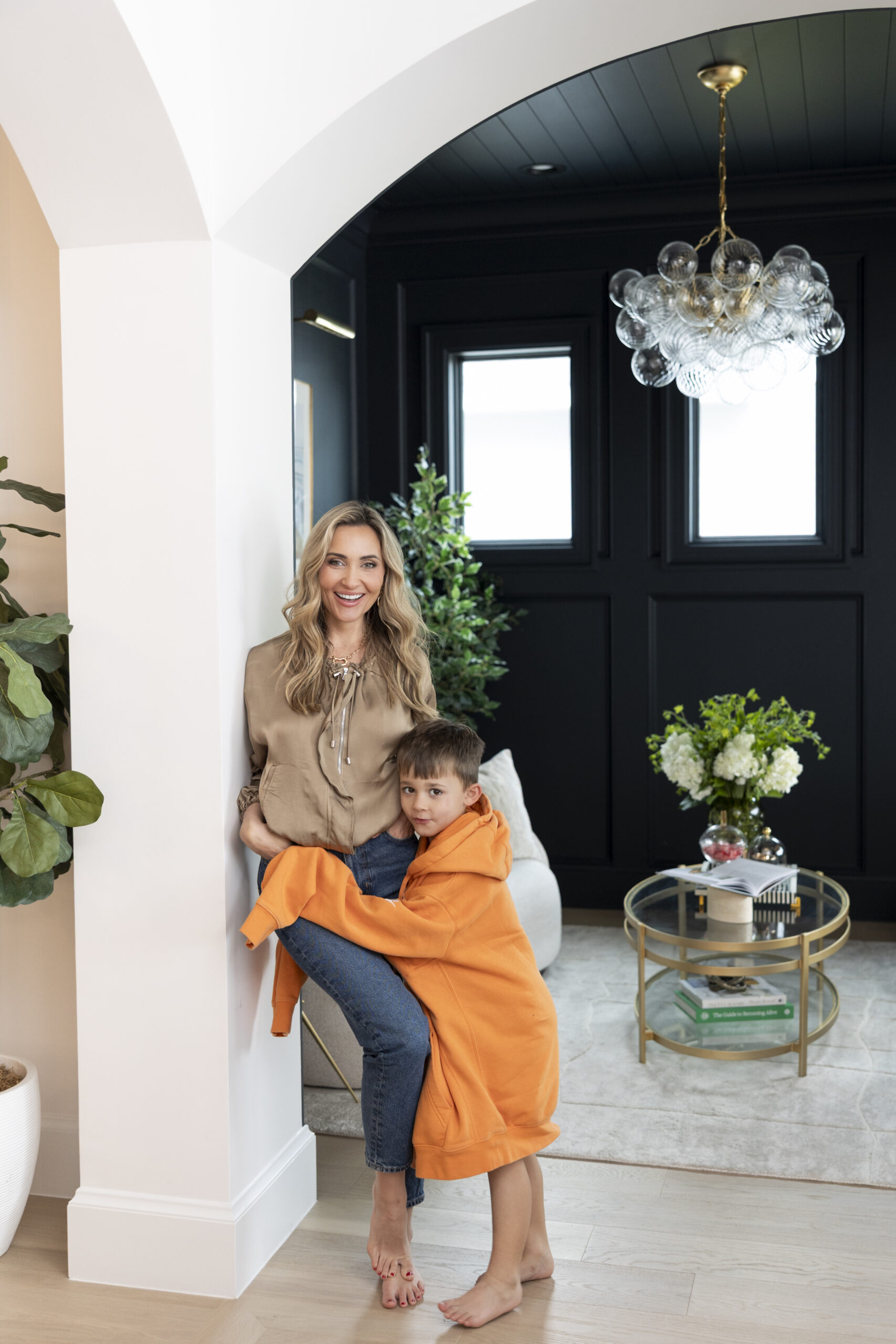
Two Things Can Be True About Your Home.
It can be both beautiful and functional.
My home should be the place my kids want to come back to.
Not just because they live there, but because it feels good to come home.
Somewhere Collins and David can walk in after school. Drop their bags, grab something from the kitchen and bring friends over without wondering whether they’re allowed to sit on the sofa.
As they get older, I hope ours becomes the house everyone naturally ends up at, even if that means I somehow start feeding half the neighborhood.
At the same time, I really love a beautiful home.
Give me the custom millwork, the beautiful fabric, the lighting I’ve thought about for far too long and a kitchen full of friends with a good bottle of wine open.
Becoming a mom didn’t suddenly make me stop caring about any of that, and I’ve never understood why family life and beautiful interiors are so often treated as though they’re opposing ideas.
Two things can be true.
A home can give your children somewhere safe to land while still feeling sophisticated enough for the adults who live there. It can handle backpacks, snacks and wet swimsuits without every material being chosen solely because somebody promised you could wipe it clean with a baby wipe.
The catch is that you have to design for both.
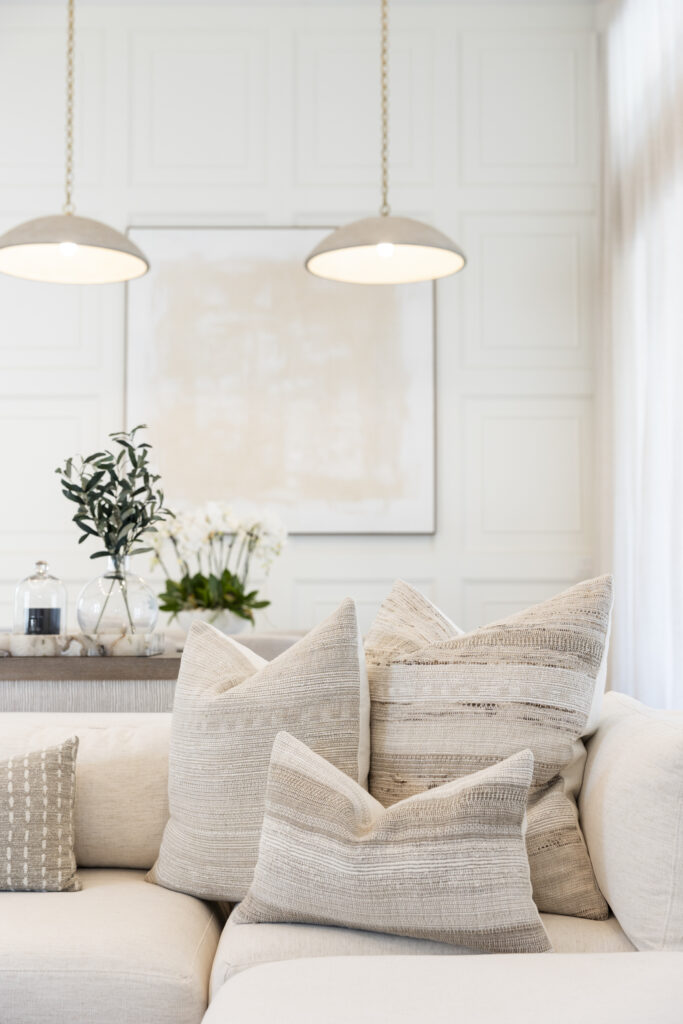
“Family-Friendly” Is NOT an Aesthetic
Whenever people hear family-friendly design, there’s a tendency to picture the safest possible version of everything. Preferably in grey or beige.
That isn’t what I mean.
Designing for family life is much more nuanced because different parts of your home need different things from you.
The sofa everyone collapses onto after school needs to work harder than a chair in the primary bedroom, while the kitchen has to deal with breakfast before school, homework at the island, dinner, entertaining and whatever mysteriously sticky substance appears on the countertop by the end of the day.
Once you understand how the room will actually be used, material decisions get much easier.
Performance fabrics today can be genuinely beautiful these days.
Natural materials can absolutely exist in homes with children when they’re used thoughtfully, and not every surface needs to survive an apocalypse simply because a five-year-old lives somewhere within the same ZIP code.
We have to know where durability matters, where you can take a little more risk and how to create something that doesn’t make you nervous every time somebody walks into the room holding a drink.
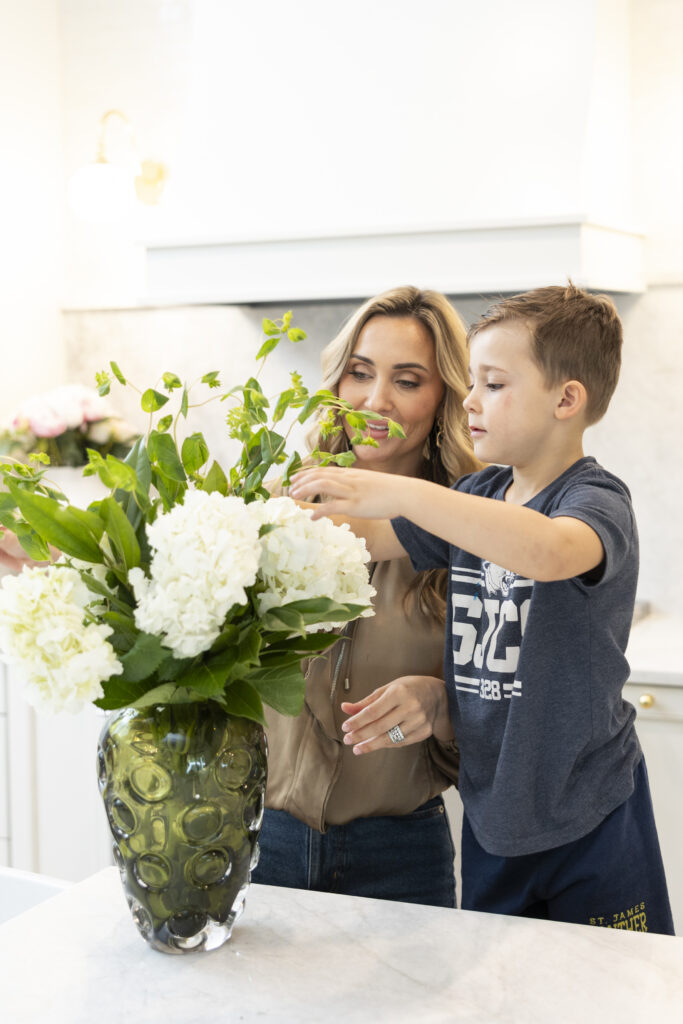
Building My Own Home Made This Even Clearer
Designing my own home really brought this philosophy into focus for me because, for once, I wasn’t making those decisions solely as the designer.
I was the client too.
When we bought our semi-custom home, much of the structure had already been decided, so this wasn’t a project where I could redraw everything and start again.
Instead, the opportunity was in the selections and details, which I actually loved because it gave me the chance to prove something I say to clients all the time: you don’t need to reinvent the entire house to completely change how it feels.
Every decision had to earn its place.
The arches, pocket doors, cabinetry details, wallpapered ceilings and the moodier little coffee and wine room weren’t there because they looked pretty on a mood board.
They helped give the house character and made it feel like ours, rather than the same semi-custom home another family could have purchased.
And with kids involved, function mattered just as much.
Having a walk-in pantry made sense for how we actually use the kitchen.. down to where the kids snack drawer was placed.
While the spaces where we gather needed to work for the kids during the day and still feel like somewhere Erik and I wanted to spend time once they were in bed.
Building it also gave me a new appreciation for what our clients experience.
I knew construction timelines, budgets and change orders professionally, but sitting on the other side of those decisions is different. Suddenly you’re looking at a number attached to something in your own house and thinking, okay, how badly do I really want that?
Very badly, occasionally.
It reinforced something else for me too: the best decisions aren’t necessarily the most expensive ones. They’re the ones you’ll feel every day because they make your home easier, more comfortable or simply more enjoyable to live in.
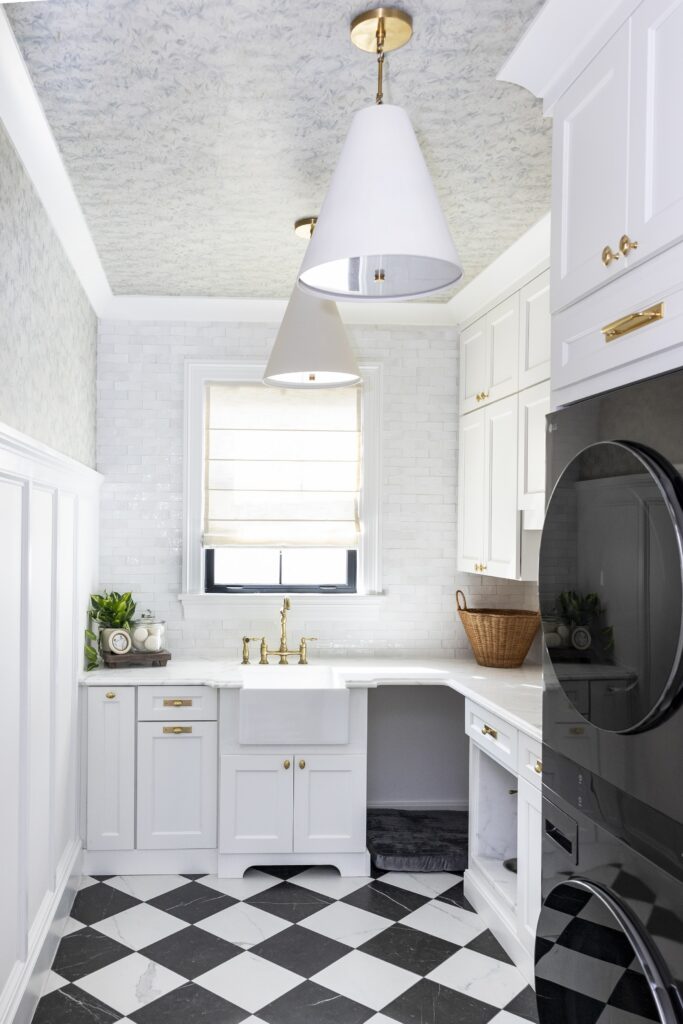
Your House Should Meet You Halfway
Families have habits, whether we’d like to admit them or not.
If everyone comes through the garage and immediately drops their shoes beside the same wall, you can spend the next ten years asking them to carry those shoes somewhere else, or you can put the storage where the shoes already want to live.
Personally, I’ve got enough battles.
That same thinking applies throughout a home:
*Maybe homework always happens at the kitchen island even though you created a beautiful little desk elsewhere.
*Perhaps everyone gravitates toward one end of the family room.
*Or guests never sit in the formal space you imagined they’d use.
Those patterns aren’t annoyances we should design against.
They’re clues.
This is why conversations with clients often have surprisingly little to do with Pinterest at first.
I want to know how mornings feel in your house, where everybody gathers, what always ends up on the counter, how you entertain and what drives you slightly insane about your current layout.
A family might tell me they need more storage. But when we dig deeper, what they really need is storage in the place where their belongings naturally accumulate.
There’s a difference.
We design for the people who actually live there.
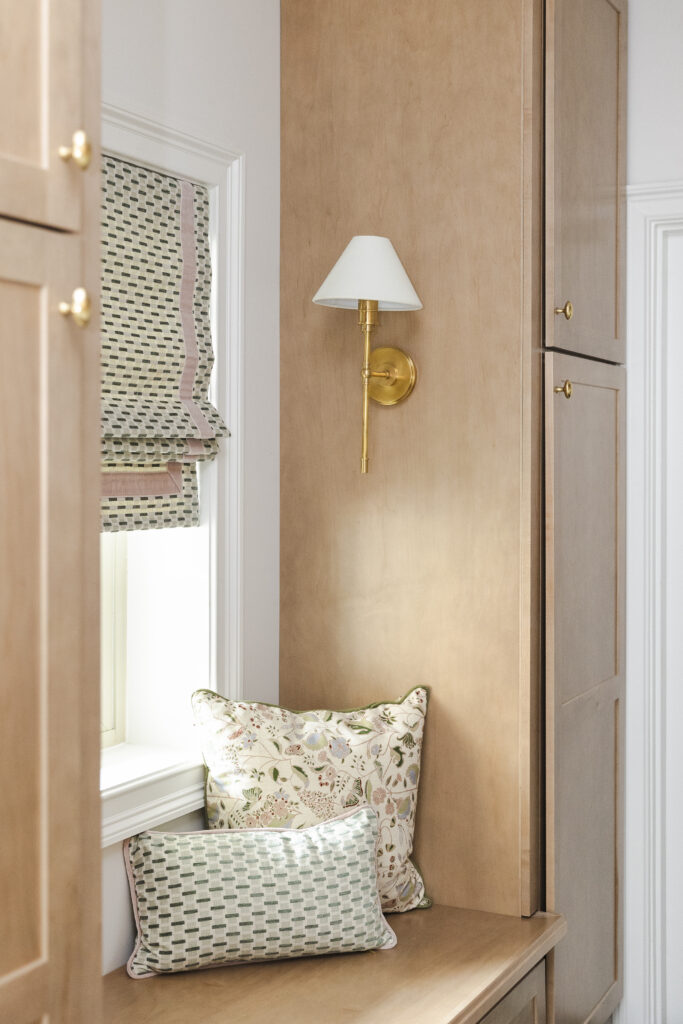
The Adults Are Allowed Beautiful Things Too
Somewhere in the conversation about designing for children, the adults can disappear.
Suddenly every decision revolves around what the kids need. And Mom and Dad are expected to patiently wait until everyone leaves for college before buying anything they really love.
I’m not doing that.
Entertaining is a big part of how I think about my own home. Years ago someone told me to always keep a good bottle of champagne and frozen cookies in the house for unexpected guests, and this is one piece of advice I have followed with impressive dedication.
The best evenings are often the ones that weren’t particularly planned.
Somebody stops by, a bottle gets opened, everyone ends up around the kitchen island and suddenly it’s much later than anyone realized.
A well-designed family home should make those moments easier rather than requiring a full household reset before another adult is allowed through the door.
That comes back to flow, storage and planning.
Everyday clutter needs somewhere realistic to disappear, and rooms should feel comfortable enough to use on an ordinary Wednesday instead of waiting for the one holiday a year when you suddenly become the person you imagined would use them.
Children live here, yes.
So do you.
Your Home Has to Grow With You
The difficult thing about designing for families is that the family keeps changing.
A playroom that works perfectly now won’t always need to be a playroom.
The little desk covered in crayons might eventually become somewhere homework happens, and one day the child who was extremely passionate about dinosaurs will casually inform you that dinosaurs are for babies and he has apparently never liked them.
Kids are helpful like that.
Rather than designing every space too specifically for the exact age everyone happens to be today, I like creating enough flexibility for the house to evolve.
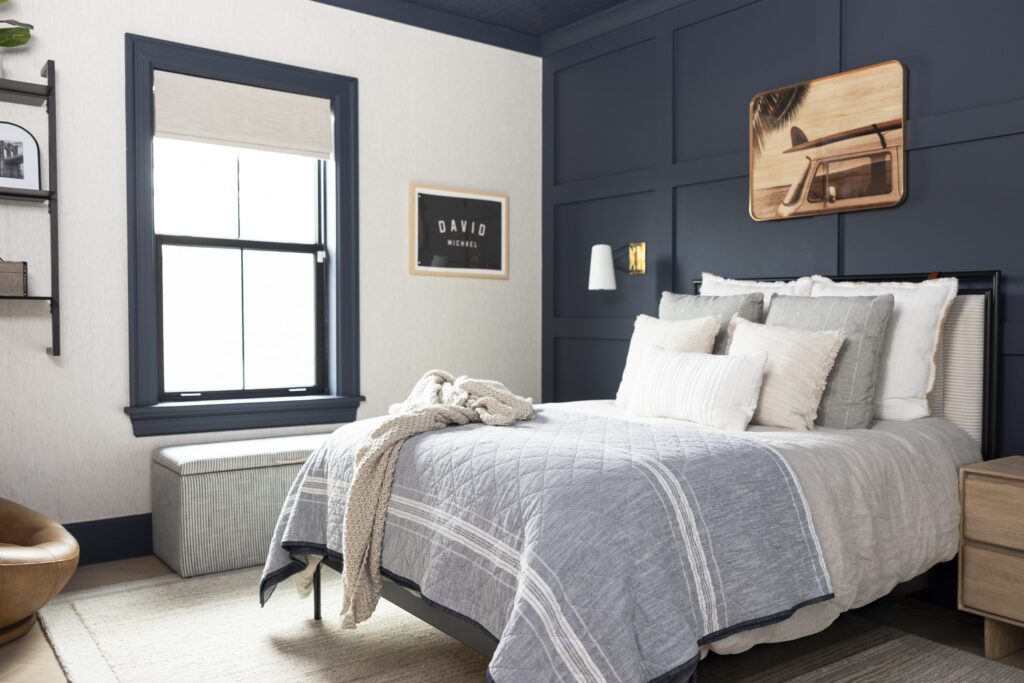
That doesn’t mean making children’s rooms bland so they’ll still work when they’re sixteen. Please give me personality. Give me the wallpaper, pattern and fun!
My definition of luxury has changed over the years.
Real luxury is being comfortable in your own home.
Leave a Reply
signature services


custom
new builds

virtual playbook


