

“How Can You Design My Home If You’ve Never Been In It?”
The virtual playbook
Letting someone design your home from another state does require a little explanation. Especially when you’ve been standing in your own living room for three years and still haven’t figured out what belongs opposite the sofa.
You live there, you know the space, and you’ve moved that chair enough times to have considered putting it on wheels.
So how is someone looking at your home through a screen going to see something you haven’t?
It’s a fair question, particularly when you’re making an investment in rooms your family will use every day.
You want to know that the furniture will fit, the materials will feel right, and the person making these decisions understands more about your life than your preference for a warm neutral.
Through our Virtual Playbook, we get to know your home in a very deliberate way. With detailed measurements, photographs, video, and conversations that tend to reveal considerably more than whether you like the sofa in an inspiration image. By the time we’re selecting anything, we’ve already spent a lot of time understanding what needs to happen around it.
First, show us the parts you usually crop out
There is a natural temptation to make your house look its best before sending photographs to an interior designer, which I understand completely. Although if the purpose of the project is to figure out where everything should go. Hiding all of it before we begin does make our job a little more interesting.
The awkward corner matters. Along with the doorway just outside the frame and the cabinet you can only open when somebody moves their chair. Those details help explain why a room might look perfectly lovely in a photograph and still feel frustrating to use.
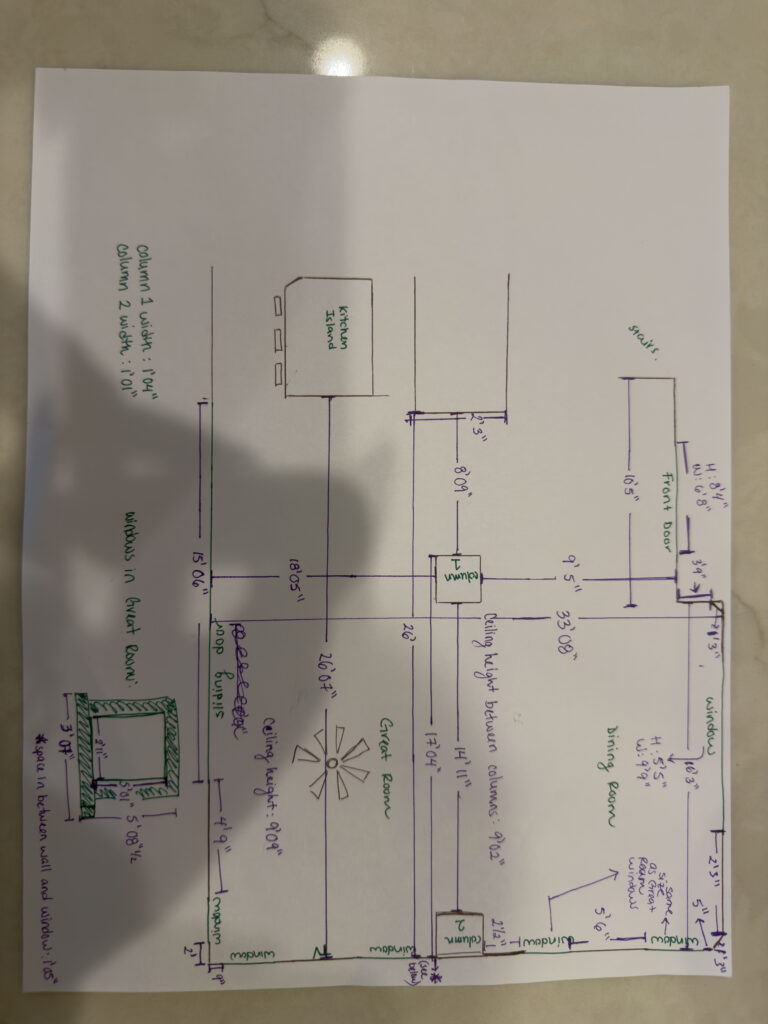
At the beginning of a remotely documented project, we guide you through measuring, photographing, and filming your space, with clear instructions about what to capture. You don’t need to arrive knowing how to put together a drawing set. That would be a rather ambitious prerequisite for hiring us.
Measurements establish the dimensions we’re working within, while photographs and video help us understand the architecture, existing finishes, and how the room connects to the spaces around it. Together, they give us the information to develop layouts with purpose, rather than making an optimistic assumption about what might fit beside the fireplace.
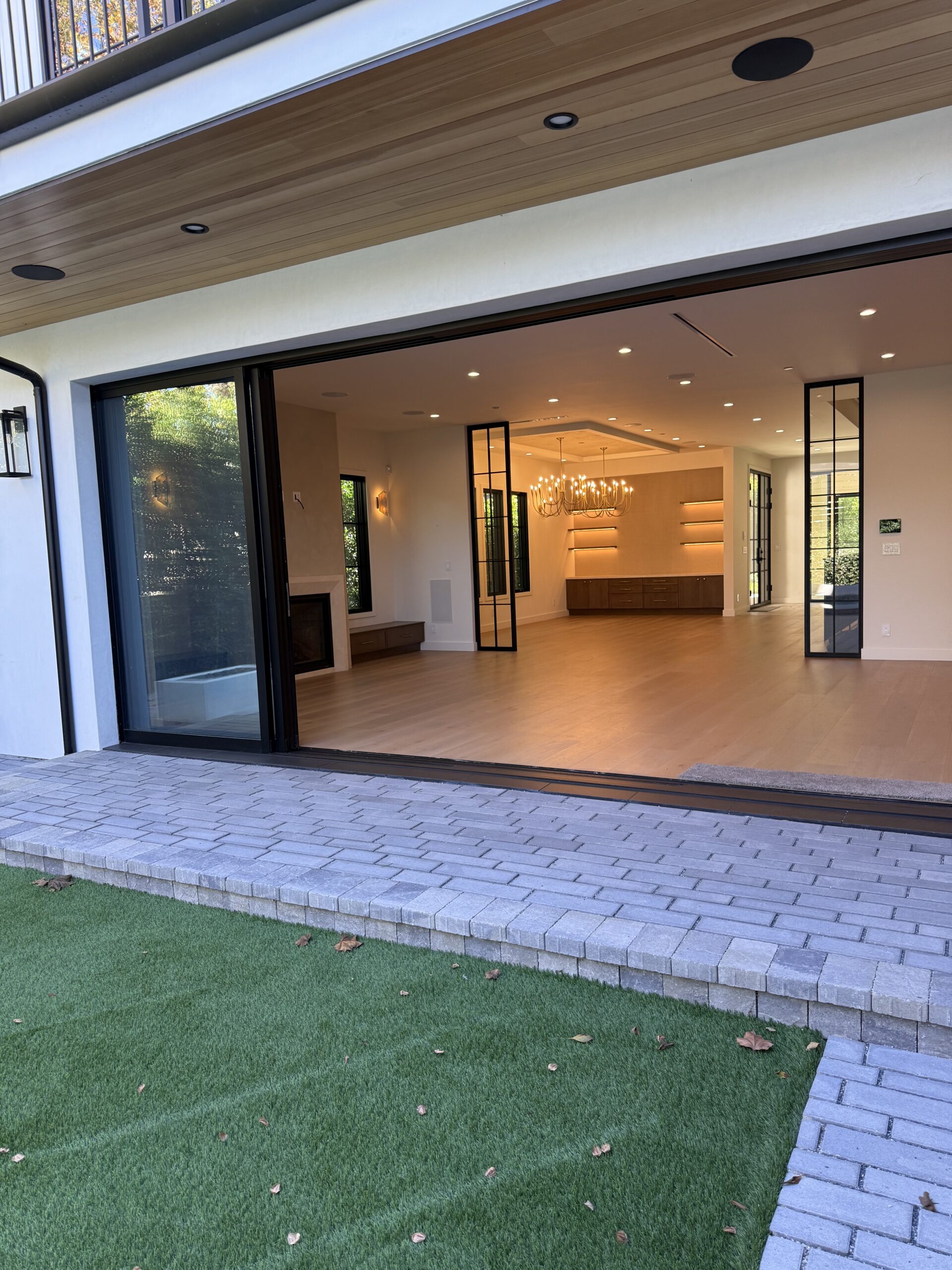
And here’s something people may not expect: a Virtual Playbook can also include an initial visit, depending on the scope.
For a full-home furnishing project in California, our team traveled out to document the home before developing the design back in our studio.
We establish the right approach for the project at the beginning, so “virtual” doesn’t mean every home has to be documented in exactly the same way.
Your habits have quite a lot to do with the furniture
Knowing the dimensions of your living room tells me what we can put in it, but understanding your family tells me what we should.
That’s why our questionnaire and conversations go beyond the visual direction. We want to understand how you gather, what you need to store, which existing pieces matter to you, and what you’re hoping will feel different once the room is finished.
For an Orlando living room project in our Virtual Playbook, the family wanted a welcoming space for coffee dates, playdates, and long conversations, with thoughtful storage built into the design. Their photographs, video, and measurements gave us the starting point, and their brief helped determine how the room needed to perform.
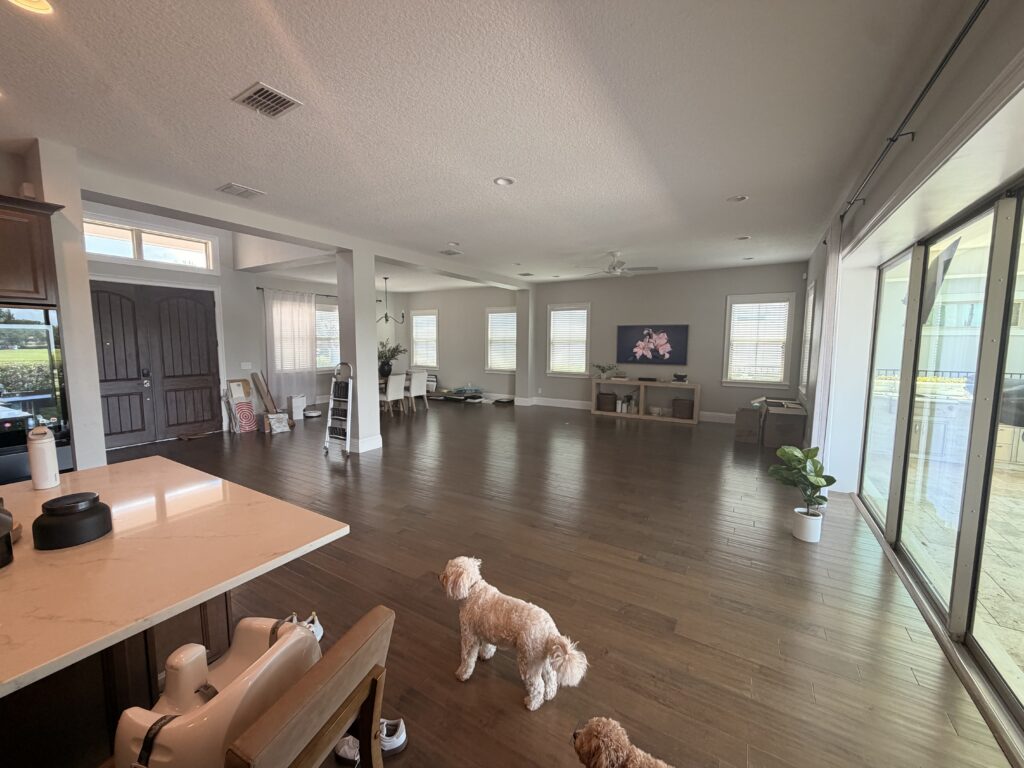
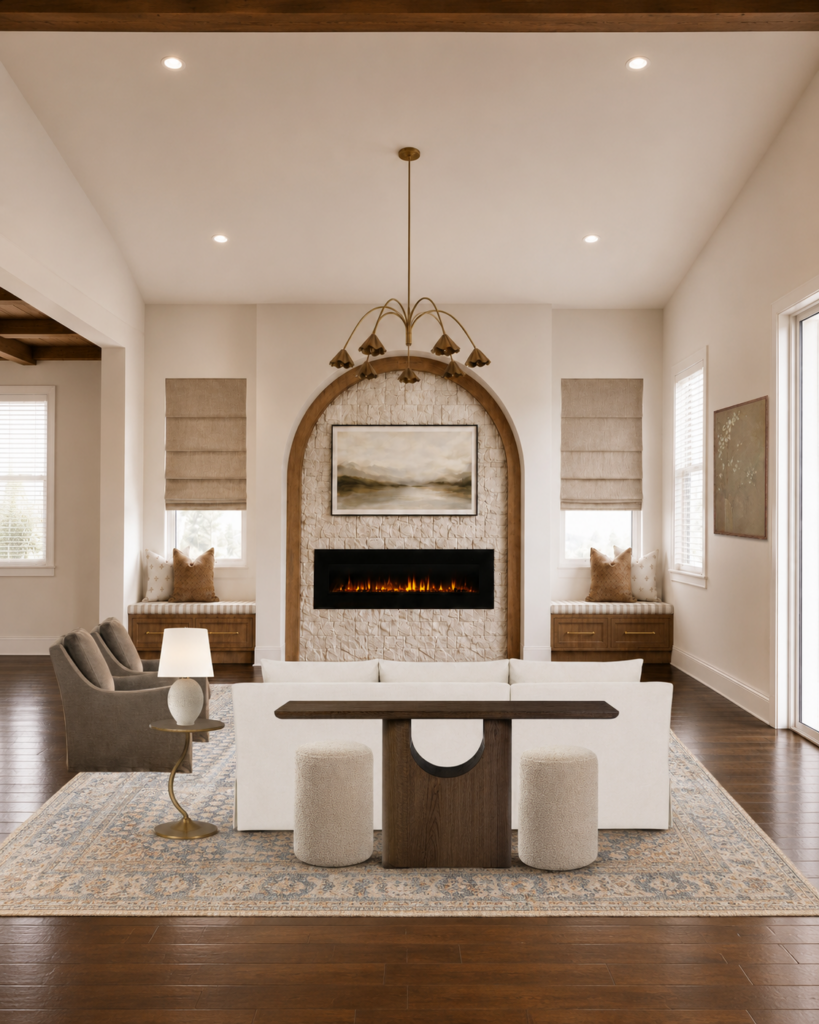
From there, we developed the furniture layout around circulation, television viewing, and the connection to the surrounding home. Custom millwork became part of the plan, with elevations detailing the cabinetry, fireplace, and television placement for the contractor to execute.
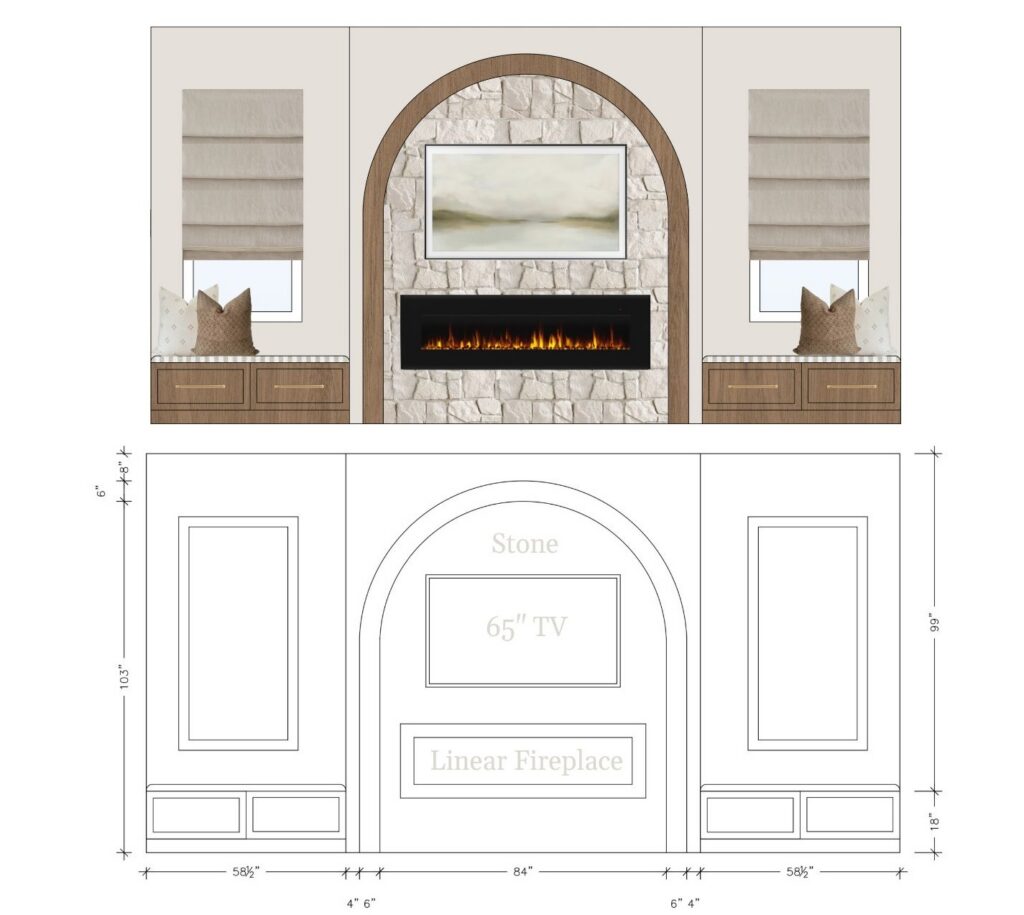
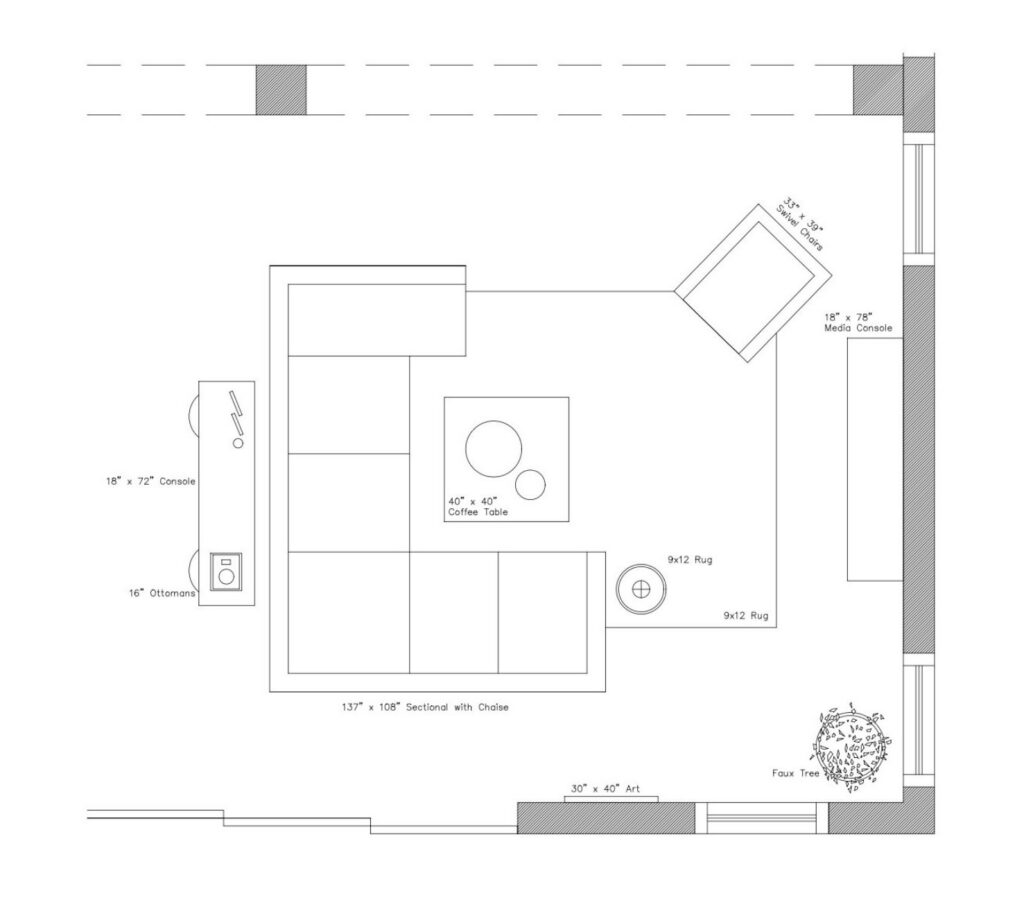

Being remote didn’t make those decisions any less specific to the family. We still needed to work out where people would sit, how they would move through the room, and what the cabinetry needed to accommodate, including the things nobody particularly wanted on display during those coffee dates.
You get to see it together before committing to the pieces
One of the harder parts of furnishing a home is being asked to imagine how several expensive decisions will look together based on separate product photographs, a few measurements, and your willingness to believe that “ivory” means roughly the same thing to every manufacturer.
There is a reason we spend so much time developing and presenting the complete design.
Depending on the project, your Virtual Playbook can include furniture plans, design boards, elevations, material selections, and photorealistic renderings. Each helps explain a different part of the room, from how the furniture fits to how the cabinetry relates to the lighting above it.
During your virtual presentation, we walk you through the thinking behind those decisions, including the layout, selections, and where we’ve chosen to direct the investment. You then have seven days to gather your thoughts and submit one consolidated round of feedback, allowing us to make the included refinements before completing your Playbook.
There’s a physical part to the process too, which tends to be a welcome surprise when people hear the word virtual. Following the presentation and refinement, we curate a sample box of key fabrics, finishes, and materials so you can experience them together in your own home.
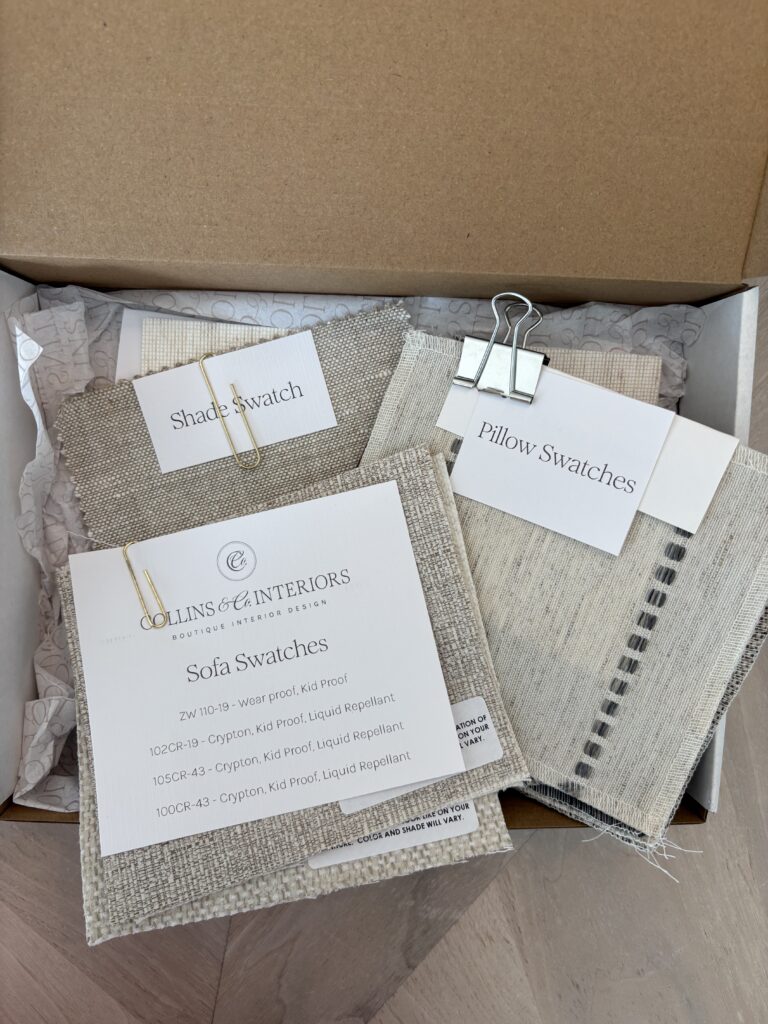
You can feel the texture, look at the combinations, and see how they respond to your natural light. As much as I appreciate a beautiful rendering, I would still like you to meet the fabric before entering a long-term relationship with it.
What’s the difference between the virtual playbook and full service?
The Virtual Playbook suits homeowners who want a professionally developed design and are comfortable taking responsibility for putting it into place.
Our team creates the layouts, selects the furnishings and finishes, and provides the specifications, sourcing information, and placement guidance.
You manage the ordering, delivery coordination, and installation, with the flexibility to move forward all at once or in phases.
Everything is organized through your project hub, with selections and shopping information in DesignFiles and your supporting documents kept accessible. That means when you’re ready to purchase, you can return to the actual plan instead of searching through an email thread for the lamp you’re almost certain everyone agreed on.
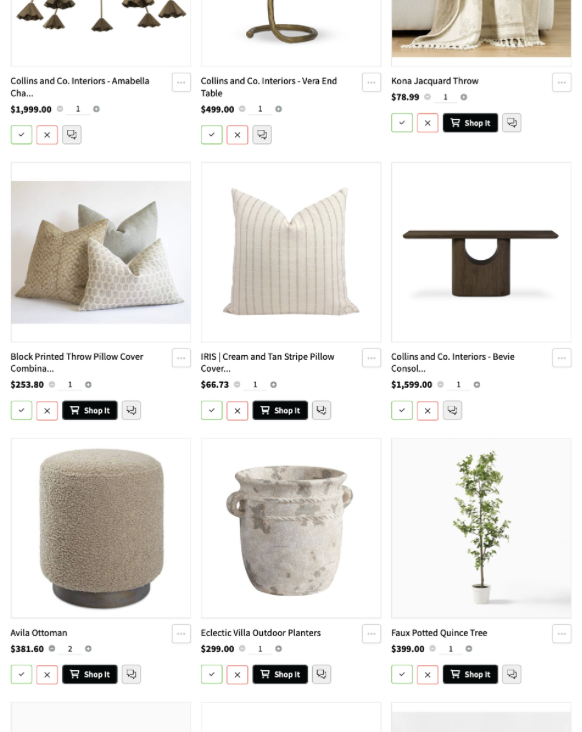
Having the whole design established also gives those purchases a direction, even if the rooms come together gradually. Product availability can change over time, so we recommend prioritizing key pieces when you’re ready; the specifications and design direction also give you a framework for assessing alternatives if something becomes unavailable.
Expertly designed, flexibly delivered.
For clients who want us to oversee purchasing, tracking, receiving, installation, and final styling, our full-service offering provides that level of involvement.
The right fit depends on how much of the implementation you want to manage yourself.
What I want you to know is that living elsewhere doesn’t prevent us from getting to know your home, or from caring deeply about whether it works for you. With the right information and a thoughtful process, we can understand the room you’ve been walking through for years and help you see what it could become.
If you’ve been waiting to find a designer whose work feels like you, only to discover they live several states away, explore working with Collins & Co. through the Virtual Playbook. We can get acquainted with the house, the family, and that chair you’re tired of moving.
Leave a Reply
signature services


custom
new builds

virtual playbook


